
Backpack, Duffel, or Wheeled Bag: Choosing the Right Player Bag
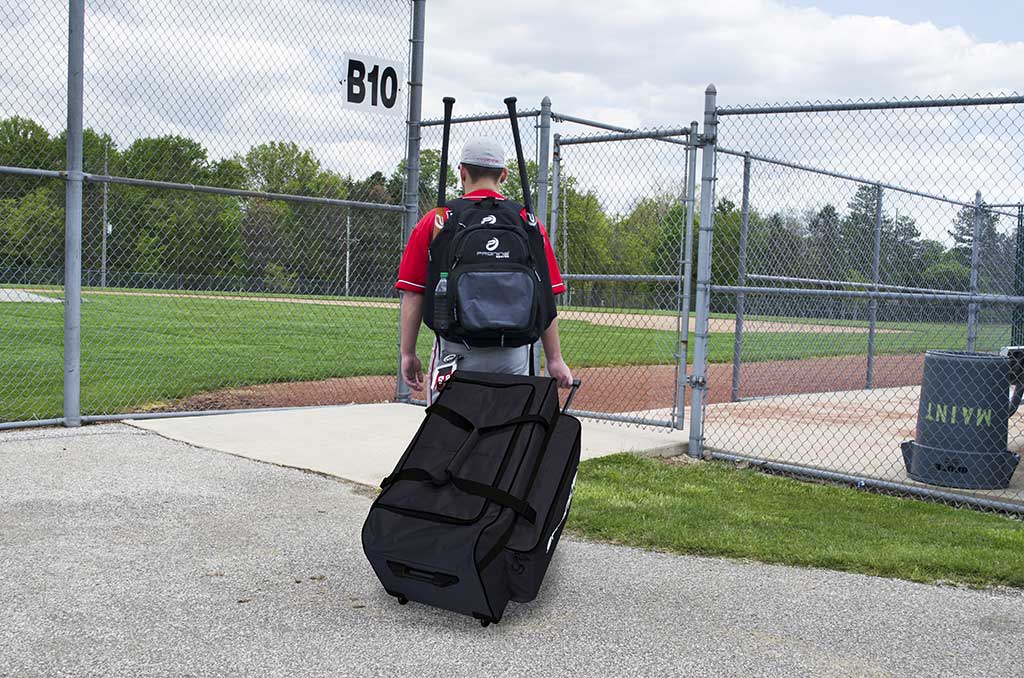
Backpacks are for players packing light and moving under their own power. Duffels trade structure for capacity, holding more gear with less organization. Wheeled bags exist for anyone hauling more weight than a shoulder should carry — in practice, that’s mostly catchers and team equipment managers. Picking the wrong one usually shows up as a strap that gives out by midseason, or a bag nobody on the team wants to be the one who has to lift it.
What each bag style is actually built for
A backpack is built around mobility first: two shoulder straps, defined compartments for cleats and a glove, and a gear load light enough to run through a parking lot with it on. It’s the right call for most position players, especially younger ages where the gear list is short.
A duffel gives up that structure for raw capacity. There’s more room for a bat, a helmet, batting gloves, and extra layers, and the single main compartment makes it easy to overpack without feeling it the way a backpack’s fixed pockets would. It’s the default at travel and high school levels, where away games mean carrying more for longer stretches.
A wheeled bag exists because catcher’s gear doesn’t fit the logic of either option above. A chest protector, shin guards, and a catcher’s helmet add real weight, and rolling it removes the strain of carrying that load on one shoulder for a full tournament weekend. The same case applies to team bags carrying shared gear for an equipment manager.
Matching the bag to the position and level
| Player | Typical gear load | Best fit |
|---|---|---|
| Youth position player | Glove, cleats, a bat | Sized-down backpack |
| High school / travel position player | Bat, helmet, batting gloves, extra layers | Duffel |
| Pitcher | Similar to a position player, plus arm-care gear | Backpack or duffel |
| Catcher | Chest protector, shin guards, helmet | Wheeled bag |
| Team / equipment manager | Shared gear for the whole roster | Large wheeled team bag |
Age matters as much as position. A youth player’s gear list is short enough that a backpack covers it through most of travel ball too — it’s really catchers and equipment managers, at any age, where a wheeled bag earns its size.
What a dealer should stock
A lean assortment covers most buyers without tying up shelf space in niche variants: a backpack in a youth and an adult size, one general-purpose duffel sized for travel ball, and one wheeled bag built for catcher’s gear. That covers position players, pitchers, catchers, and most team orders without needing a dozen SKUs to do it.
Team bags are worth stocking separately rather than treating a large duffel as a substitute — a buyer outfitting a whole roster is comparing on durability and organization for shared gear, not the same things an individual player cares about.
The short version
Match the bag to the gear it has to carry, not just the player’s age. Browse ProNine’s player bags for backpacks and duffels, or the team bags lineup for wheeled and shared-gear options.


