
By Jack Hayes, Operations Manager, ProNine Sports — Published September 1st 2026
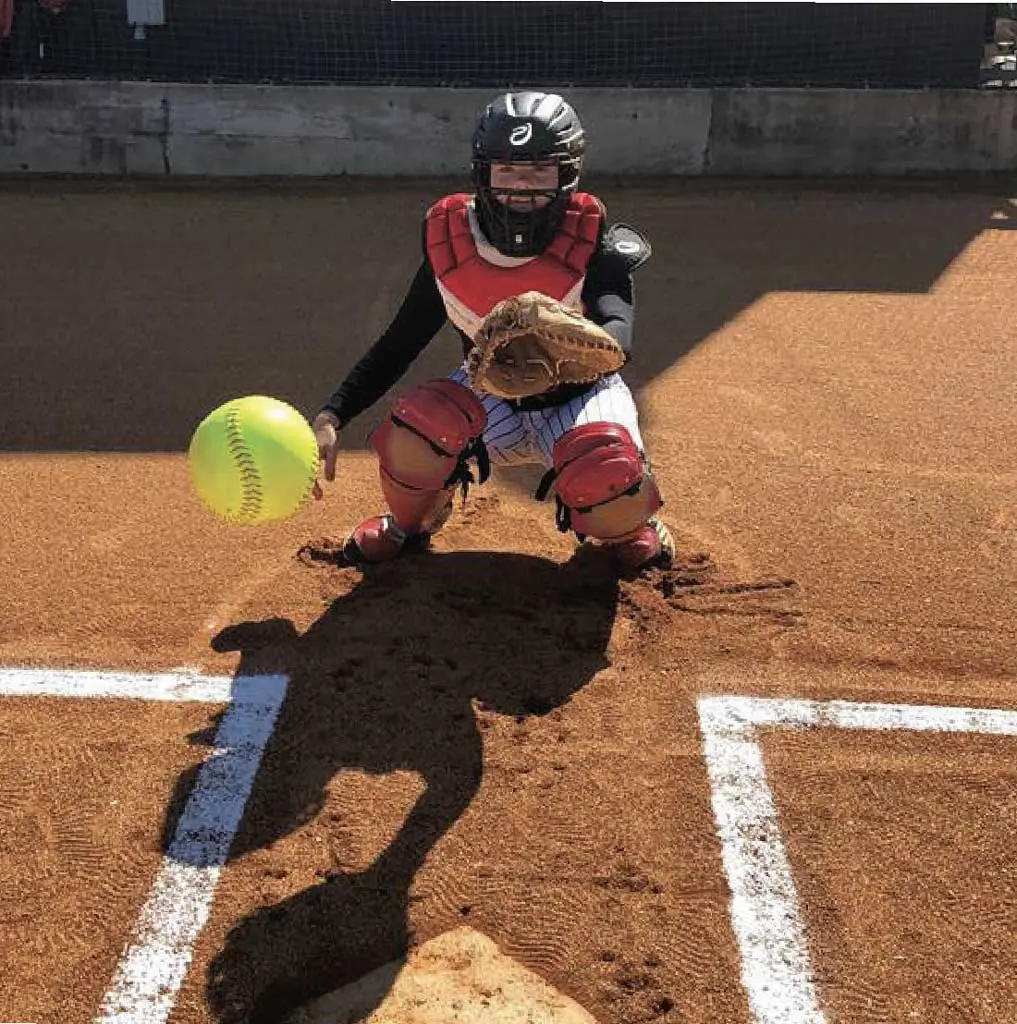
Sizing catcher’s gear correctly means matching each piece — helmet, chest protector, and leg guards — to the player’s actual measurements using the manufacturer’s size chart and confirming that the exact model carries the certification needed for the level of play, since certification applies model by model rather than to an entire gear line.
| Gear | Sizing approach | Certification to verify |
|---|---|---|
| Catcher’s helmet or mask | Fit to head measurement per size chart | Certain models meet applicable NOCSAE standards — confirm for the specific model |
| Chest protector | Fit to chest/torso measurement and age range | Certain models are SEI certified to meet NOCSAE standards for protection against commotio cordis — confirm for the specific model |
| Leg guards | Fit to leg length and knee position | Sized by manufacturer chart; confirm league requirements for the level of play |
A certification or NOCSAE standard applies to the exact model it was tested for. It should never be assumed that because one model in a gear line is certified, every model in that line carries the same certification. Always check the specific product page or packaging for the model being purchased.
Measure the player using the manufacturer’s current size chart rather than estimating from age alone.
Confirm certification status for each specific model — helmet, chest protector, and leg guards separately.
Recheck sizing each season, since youth players can move up a size chart faster than expected.
This guide reflects ProNine Sports’ current catcher’s gear line as of September 2026. Confirm current certifications and sizing against the ProNine catalog before purchase.

By Jack Hayes, Operations Manager, ProNine Sports — Published July 10th, 2026
These marks each certify something different: NFHS and USSSA (along with Little League, Babe Ruth League, Cal Ripken League, PONY, and USA Softball) approve equipment for play under their specific rules, while NOCSAE and SEI certify that protective equipment meets independent safety-testing standards. Knowing which type of mark you’re looking at — a play-approval mark or a safety-testing mark — makes it much easier to buy the right equipment for a given league or level.
| Mark | What it is | What it applies to | Why it matters |
|---|---|---|---|
| NFHS | National Federation of State High School Associations | Baseballs and softballs for high school play | Most state high school associations require NFHS-approved balls for official games |
| USSSA | United States Specialty Sports Association | Baseballs and softballs for USSSA-sanctioned tournament play | Required for USSSA league and tournament eligibility |
| Little League, Babe Ruth League, Cal Ripken League, PONY, USA Softball | Youth and amateur governing bodies | Age- and league-specific baseballs and softballs | Each body licenses its own approved balls for regular-season or tournament play |
| NOCSAE | National Operating Committee on Standards for Athletic Equipment | Protective gear — catcher’s and umpire helmets, chest protectors | Sets the safety-performance standard equipment must meet, including protection against commotio cordis for certain chest protectors |
| SEI | Safety Equipment Institute | Independent certification lab | Confirms through independent testing that a specific model actually meets the NOCSAE standard it claims |
A certification or approval applies to the exact model it was tested or licensed for — not to an entire product line or brand. Two balls or two chest protectors from the same manufacturer can carry different approvals depending on construction. Always check the mark on the specific model against the current catalog or product page before ordering for a sanctioned league or governing body.